The 50/30/20 Budget Explained
Budgeting often sounds more complicated than it needs to be. Between spreadsheets, financial apps, savings goals, and expense categories, many people feel overwhelmed before they even begin.
The 50/30/20 rule was created as a simple way to manage money without tracking every dollar. Instead of focusing on dozens of spending categories, this budgeting method divides income into three broad areas: needs, wants, and savings.
Its simplicity has made it one of the most popular budgeting frameworks in the world. While it may not work perfectly for everyone, it offers a straightforward starting point for people who want to gain more control over their finances.
Key Takeaways
• The 50/30/20 rule divides income into needs, wants, and savings.
• Fifty percent of income goes toward essential expenses.
• Thirty percent is allocated to discretionary spending and lifestyle choices.
• Twenty percent is directed toward savings, investments, or debt repayment.
• The method is designed to simplify budgeting and improve financial balance.
What Is the 50/30/20 Budget?
The 50/30/20 budget is a money management framework that recommends dividing your after-tax income into three categories.
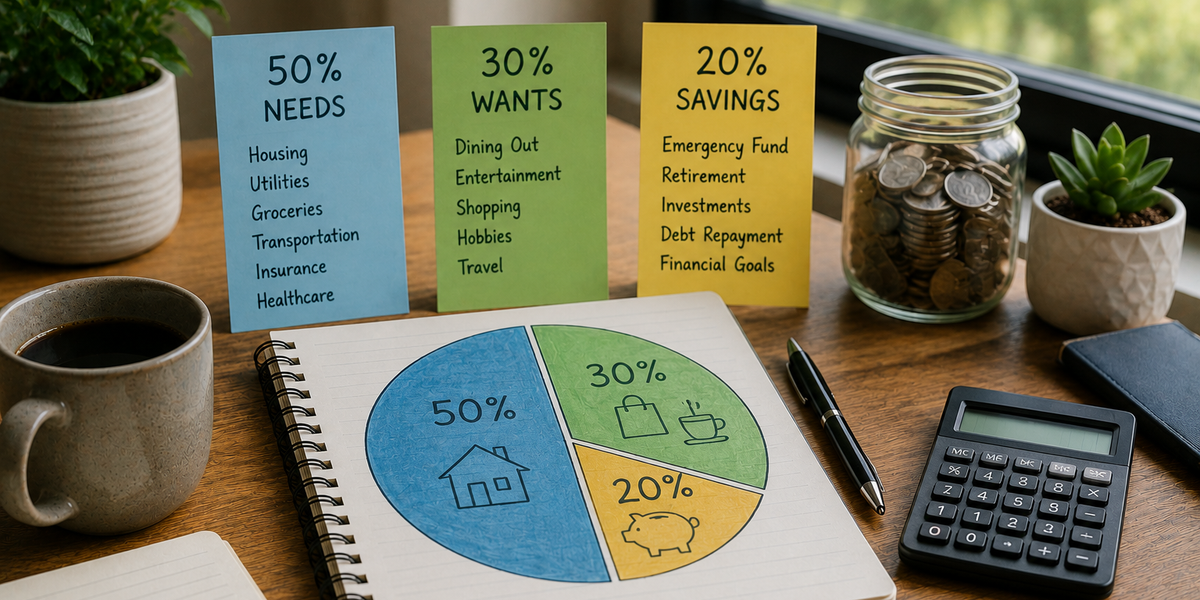
According to the rule, 50 percent of your income should go toward necessities, 30 percent toward personal wants, and 20 percent toward savings and financial goals.
Rather than creating dozens of detailed spending categories, the system focuses on maintaining balance across the areas that matter most.
For many people, this approach feels less restrictive than traditional budgeting methods while still encouraging responsible financial habits.
Understanding the 50 Percent for Needs
The largest portion of the budget is reserved for necessities. These are the expenses that are essential to everyday life and difficult to avoid.
Typical examples include housing costs, utility bills, groceries, transportation, insurance, healthcare, and minimum debt payments.
The idea is that these expenses should ideally consume no more than half of your after-tax income. If they take up significantly more, it may become difficult to save money or maintain flexibility in other areas of your budget.
This category focuses on needs rather than conveniences, which means it is important to distinguish between essential expenses and optional upgrades.
Understanding the 30 Percent for Wants
The next portion of the budget is dedicated to wants. These are expenses that improve quality of life but are not strictly necessary for survival.
Dining out, entertainment, vacations, hobbies, streaming services, shopping, gym memberships, and other lifestyle purchases often fall into this category.
Many people view budgeting as giving up enjoyable experiences, but the 50/30/20 method intentionally creates room for them. The goal is not to eliminate spending on things you enjoy but to keep that spending within reasonable limits.
By allocating a specific percentage to wants, people can enjoy their money without feeling guilty or losing sight of long-term financial goals.
Understanding the 20 Percent for Savings
The final portion of the budget is focused on building financial security.
This category includes emergency fund contributions, retirement savings, investments, and additional debt repayments beyond minimum requirements.
For many financial experts, this is the most important part of the framework because it helps people prepare for future goals and unexpected challenges.
Even if saving 20 percent feels difficult at first, consistently setting aside money can have a significant impact over time. Small contributions made regularly often grow into substantial financial resources.
Why the Rule Became So Popular
One reason the 50/30/20 budget gained widespread popularity is its simplicity.
Many budgeting systems require detailed tracking of every purchase, which can feel overwhelming and time-consuming. The 50/30/20 approach focuses on the bigger picture, making it easier for people to understand where their money is going.
Because the framework is flexible, it can also be adapted to different income levels, lifestyles, and financial goals.
The emphasis is not on perfection but on creating healthier financial habits over the long term.
When the Rule May Need Adjustments
While the 50/30/20 budget works well for many people, it is not a universal solution.
In areas with high housing costs, necessities may consume more than 50 percent of income. Likewise, individuals focused on paying off debt quickly or building wealth may choose to allocate more than 20 percent toward savings.
The percentages should be viewed as guidelines rather than strict rules. Personal circumstances often require adjustments based on income, location, family responsibilities, and financial priorities.
The most effective budget is ultimately the one that is realistic and sustainable.
Common Budgeting Mistakes
One common mistake is incorrectly classifying expenses. Many people label discretionary spending as a necessity, making it difficult to understand where money is actually going.
Another mistake is becoming discouraged when the percentages are not perfect. Budgeting is a tool for improvement, not a test to pass or fail.
Financial situations change over time, and budgets should evolve alongside them. The goal is progress, not perfection.
A Simple Framework for Better Financial Habits
The 50/30/20 budget remains popular because it offers a practical balance between enjoying life today and preparing for the future.
Dividing income into needs, wants, and savings, it provides a clear structure that can help people spend more intentionally and avoid financial stress.
While no budgeting system works perfectly for everyone, the 50/30/20 rule offers an easy starting point for anyone looking to take control of their money. Sometimes the simplest approach is the one most people are actually able to stick with.