
The Difference Between an LLC and a Sole Proprietorship (Explained Simply)
Starting a business involves many decisions, but one of the first and most important is choosing a business structure. For many new entrepreneurs, the choice often comes down to two common options: a sole proprietorship or a Limited Liability Company, better known as an LLC.
At first glance, the difference may seem confusing. Both structures allow people to operate businesses, earn income, and build their brands. However, they differ in important ways that can affect taxes, legal protection, paperwork, and long-term growth.
Understanding the basics can help business owners choose the option that best fits their goals.
Key Takeaways
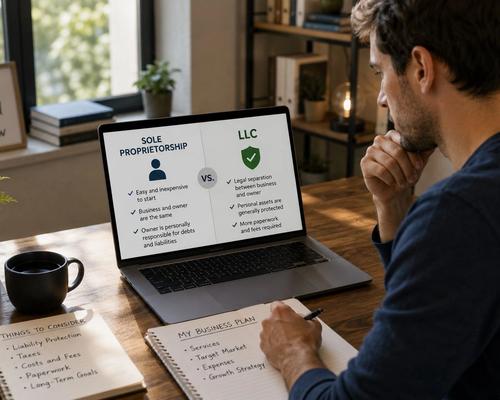
• A sole proprietorship is the simplest and easiest business structure to start.
• An LLC provides legal separation between the owner and the business.
• Sole proprietors are personally responsible for business debts and liabilities.
• LLCs generally offer more protection but require additional paperwork and fees.
• The right choice depends on the business owner’s needs, risk level, and future plans.
What Is a Sole Proprietorship?
A sole proprietorship is the simplest form of business ownership. In most places, it is automatically created when a person begins operating a business without formally registering a separate legal entity.
Many freelancers, consultants, photographers, tutors, and small online sellers start as sole proprietors because the setup process is quick and inexpensive.
The business and the owner are legally considered the same entity. This means all profits belong directly to the owner, but it also means the owner is personally responsible for any debts or legal issues related to the business.
For people testing a business idea or working independently, a sole proprietorship is often the easiest place to start.
What Is an LLC?
An LLC, or Limited Liability Company, is a business structure that creates a legal separation between the business and its owner.
Unlike a sole proprietorship, an LLC is considered its own legal entity. This distinction can provide an important layer of protection if the business faces lawsuits, debts, or other financial obligations.
While the owner still controls the business, personal assets such as savings accounts, personal property, or a family home are generally better protected from business-related liabilities.
Because of this protection, many entrepreneurs choose to form an LLC as their businesses grow.
The Biggest Difference: Liability Protection
The most significant difference between a sole proprietorship and an LLC is liability protection.
With a sole proprietorship, there is no legal separation between the owner and the business. If the business owes money, faces a lawsuit, or cannot pay its debts, the owner’s personal assets may be at risk.
An LLC helps create a legal boundary between personal and business finances. While no business structure offers absolute protection in every situation, an LLC generally provides much stronger safeguards for business owners.
This is often the primary reason entrepreneurs decide to switch from a sole proprietorship to an LLC.
What About Taxes?
One reason sole proprietorships remain popular is their simplicity when it comes to taxes.
Business income is typically reported directly on the owner’s personal tax return. There is usually no separate business tax filing required for the entity itself.
Many LLCs are taxed in a similar way, especially when there is only one owner. In these cases, profits often pass directly to the owner’s personal tax return as well.
The exact tax rules vary depending on location, but for many small businesses, the tax differences are not as dramatic as people assume.
Costs and Paperwork
Another major difference involves setup and maintenance.
A sole proprietorship usually requires little or no formal paperwork beyond any local permits or licenses needed to operate.
Forming an LLC typically involves registration documents, government filing fees, and ongoing compliance requirements. Depending on the jurisdiction, there may also be annual reports or renewal fees.
For some business owners, these additional costs are a worthwhile trade-off for the added legal protection.
Which Option Is Better for New Businesses?
There is no universal answer because every business is different.
Someone offering occasional freelance services may feel comfortable operating as a sole proprietor while testing the market. The low costs and simplicity can make it an attractive starting point.
On the other hand, a business that works with clients, signs contracts, sells products, or faces higher legal risks may benefit from the protection offered by an LLC.
Many entrepreneurs begin as sole proprietors and later transition to an LLC once their income, customer base, or level of risk increases.
Common Misconceptions
One common misconception is that an LLC automatically makes a business larger or more professional. While an LLC can enhance credibility, success ultimately depends on the quality of the business itself.
Another misconception is that sole proprietorships are only for small businesses. Many profitable businesses operate as sole proprietorships for years before changing structures.
The decision is less about business size and more about legal protection, risk tolerance, and future plans.
Choosing the Right Structure
Both sole proprietorships and LLCs have advantages. A sole proprietorship offers simplicity, low costs, and minimal paperwork, making it appealing for many first-time entrepreneurs.
An LLC requires more effort to establish, but it provides valuable legal protection and may offer greater flexibility as a business grows.
The best choice depends on the nature of the business, the level of risk involved, and the owner’s long-term goals. Understanding these differences can help entrepreneurs make informed decisions and build a stronger foundation for future success.