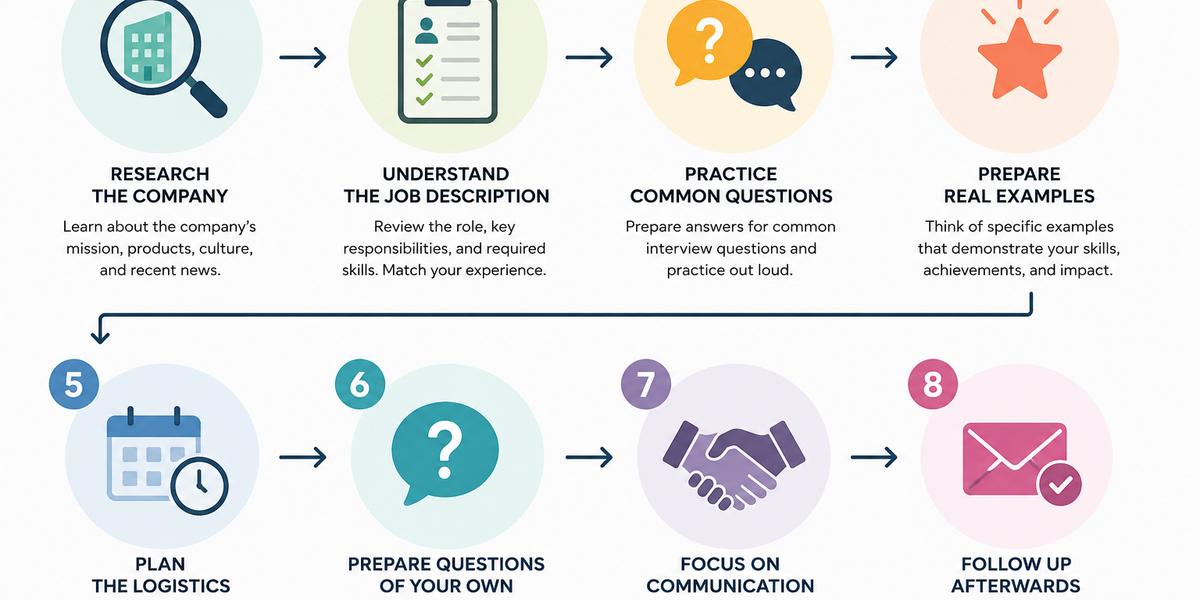
How to Prepare for a Job Interview (Step by Step)
Getting invited to a job interview is an exciting milestone, but it can also be nerve-racking. No matter how qualified you are, sitting across from a hiring manager and answering questions about your experience, skills, and goals can feel intimidating.
The good news is that confidence rarely comes from luck. It usually comes from preparation.
While it’s impossible to predict every question you’ll be asked, taking the time to prepare can significantly improve your performance and help you present yourself more effectively. A strong interview is often less about having perfect answers and more about demonstrating that you’re prepared, capable, and genuinely interested in the opportunity.
The more prepared you are, the easier it becomes to focus on having a meaningful conversation rather than worrying about what to say next.
Key Takeaways
• Preparation can significantly improve interview performance.
• Researching the company helps you provide stronger answers.
• Practicing common interview questions builds confidence.
• Employers are often evaluating communication skills as much as technical qualifications.
• Interviews work both ways—they are an opportunity for you to evaluate the employer as well.
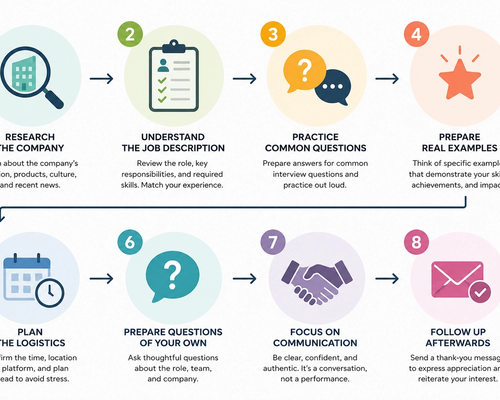
Step 1: Research the Company
One of the easiest ways to stand out in an interview is to demonstrate that you’ve done your homework.
Before the interview, spend time learning about the company’s mission, products, services, culture, and recent developments. Understanding what the organization does helps you tailor your answers and explain why you’re interested in the role.
Employers want to know that candidates are genuinely interested in the opportunity rather than simply applying to every available position.
Even a small amount of research can make a strong impression.
Step 2: Understand the Job Description
Many candidates focus entirely on their resumes and forget to carefully review the job posting itself.
The job description often contains valuable clues about what the employer is looking for. Pay attention to the required skills, responsibilities, and qualifications, then think about how your own experience connects to those needs.
Preparing examples from your background that demonstrate relevant skills can make it easier to answer questions with confidence.
The closer you can connect your experience to the role, the stronger your interview will be.
Step 3: Practice Common Questions
While every interview is different, certain questions appear frequently.
Employers often ask about your background, strengths, challenges, achievements, work style, and reasons for applying. Preparing thoughtful responses in advance can help you avoid feeling caught off guard.
The goal is not to memorize answers word for word. Instead, focus on becoming comfortable discussing your experiences clearly and naturally.
Practice can reduce anxiety and help you communicate more effectively during the actual interview.
Step 4: Prepare Real Examples
Strong interview answers often include specific examples.
Rather than simply saying you’re a good problem-solver, team player, or leader, think of situations where you demonstrated those qualities. Real experiences make your answers more believable and memorable.
Employers often remember stories more easily than general statements. Concrete examples also provide evidence that you have successfully applied your skills in real-world situations.
Showing is usually more powerful than telling.
Step 5: Plan the Logistics
Interview preparation isn’t only about answering questions.
Knowing where the interview will take place, how long it will take to get there, what platform will be used for a virtual interview, and what time you need to be ready can help reduce unnecessary stress.
Small logistical problems can create anxiety that affects performance.
Handling these details in advance allows you to focus your attention on the conversation itself rather than last-minute complications.
Step 6: Prepare Questions of Your Own
One common mistake is treating the interview as if only the employer is evaluating the candidate.
In reality, you should also be evaluating whether the role is a good fit for you. Preparing thoughtful questions about the position, team, company culture, expectations, and opportunities for growth demonstrates genuine interest while helping you gather valuable information.
Good questions can leave a positive impression and often lead to more engaging conversations.
Curiosity is usually seen as a strength during interviews.
Step 7: Focus on Communication, Not Perfection
Many candidates believe they need flawless answers to succeed.
In reality, employers are often paying attention to much more than the content of your responses. They are observing how you communicate, how you think through challenges, how you interact with others, and whether you appear confident and professional.
It’s perfectly normal to pause briefly before answering a difficult question. Thoughtful responses are usually better than rushed ones.
A strong interview often feels more like a conversation than a performance.
Step 8: Follow Up Afterwards
The interview doesn’t necessarily end when the meeting concludes.
Sending a brief thank-you message afterward can demonstrate professionalism and appreciation for the interviewer’s time. It also provides one final opportunity to express enthusiasm for the role.
While a follow-up message won’t guarantee a job offer, it can help reinforce a positive impression.
Small professional gestures are often remembered.
Turning Preparation Into Confidence
Interviews can feel intimidating, but preparation has a way of reducing uncertainty. The more familiar you are with the company, the role, and your own experiences, the easier it becomes to communicate confidently and authentically.
Success in an interview is rarely about having the perfect answer to every question. It’s about showing that you’re capable, prepared, and ready to contribute.
By researching the company, practicing your responses, preparing examples, and approaching the conversation with confidence, you’ll give yourself the best possible chance of success.
And even if one interview doesn’t lead to an offer, every interview is an opportunity to learn, improve, and become more prepared for the next one.