
Why Money Doesn't Buy Happiness (But It Helps)
Few topics generate more debate than the relationship between money and happiness.
On one side are people who argue that money can’t buy happiness. On the other are those who point out that financial problems can create enormous stress and that having more money certainly seems preferable to having less.
The truth lies somewhere in between.
Money is not a guarantee of happiness, fulfillment, or emotional well-being. It cannot automatically create meaningful relationships, a sense of purpose, good health, or inner peace. At the same time, money can make life easier in important ways by reducing stress, increasing security, and providing access to opportunities that might otherwise be unavailable.
Understanding the role money plays in happiness can help people build a healthier relationship with both their finances and their expectations.
Key Takeaways
• Money can improve quality of life, but it is not a guaranteed source of happiness.
• Financial security often reduces stress and anxiety.
• Happiness tends to depend on more than income alone.
• Relationships, health, purpose, and personal fulfillment play major roles in well-being.
• How money is used may matter more than how much money is earned.
Why Money Matters
It’s easy to dismiss the importance of money until you don’t have enough of it.
When people struggle to pay rent, cover medical expenses, buy groceries, or manage unexpected emergencies, financial stress can affect nearly every aspect of life. Worrying about bills and basic necessities consumes mental energy and can make it difficult to focus on relationships, personal growth, or long-term goals.
In this sense, money provides something extremely valuable: stability.
Financial security creates breathing room. It allows people to handle challenges more comfortably and reduces many of the pressures associated with uncertainty.
The Limits of More Money
While money can solve many practical problems, its ability to increase happiness is not unlimited.
Once basic needs are met and financial security is established, the emotional benefits of earning more money often become less dramatic. A larger salary may provide greater comfort, convenience, and freedom, but it does not automatically create stronger relationships, deeper purpose, or greater life satisfaction.
Many people spend years pursuing higher incomes only to discover that the things they hoped money would provide cannot be purchased.
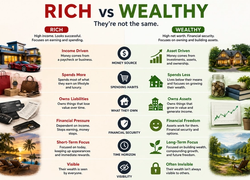
This is one reason why wealthy individuals are not automatically happier than everyone else.
Happiness Often Comes From Other Sources
When researchers study long-term well-being, certain themes appear repeatedly.
Strong relationships, meaningful work, physical health, a sense of community, personal growth, and purpose tend to have a significant influence on overall happiness. While money can support some of these areas, it cannot replace them.
A person with a high income may still feel lonely, disconnected, or unfulfilled. Conversely, someone with a modest income may experience a rich and satisfying life because of meaningful relationships and a strong sense of purpose.
Financial success and happiness are related, but they are not the same thing.
How You Spend Money Matters
Interestingly, the way money is used often has a greater impact on happiness than the amount itself.
Research has frequently suggested that experiences tend to provide longer-lasting satisfaction than material possessions. Travel, shared experiences, hobbies, learning opportunities, and time spent with loved ones often create memories that continue to provide value long after the money has been spent.
Likewise, spending money in ways that reduce stress or support personal values can have a meaningful impact on well-being.
Money becomes more valuable when it helps create the life you want rather than simply accumulating for its own sake.
The Comparison Trap
One reason money sometimes fails to increase happiness is that people often compare themselves to others.
A raise, promotion, or financial milestone can feel exciting until someone else appears to have more. Social media has amplified this tendency by constantly exposing people to carefully curated images of wealth, success, and luxury.
The problem is that comparison has no finish line.
No matter how much someone earns, there will almost always be people with larger homes, more expensive cars, or greater financial resources. Chasing happiness through comparison often leads to dissatisfaction rather than fulfillment.
Contentment is difficult to achieve when success is defined by someone else’s lifestyle.
Financial Freedom vs. Financial Status
Many people associate money with status, but one of its greatest benefits is actually freedom.
Money can provide choices. It can create flexibility in how you spend your time, where you live, the work you pursue, and how you respond to unexpected challenges.
This freedom often contributes more to happiness than status symbols or luxury purchases. Having the ability to make decisions without constant financial pressure can improve quality of life in ways that are difficult to measure.
In many cases, people are not seeking money itself. They are seeking the freedom they believe money will provide.
Finding the Right Balance
The phrase “money doesn’t buy happiness” contains some truth, but it can also be misleading.
Money may not directly create happiness, but it can remove many obstacles that stand in the way of it. It can provide security, opportunity, comfort, and flexibility. At the same time, it cannot replace relationships, purpose, health, or personal fulfillment.
The healthiest perspective may be viewing money as a tool rather than a destination. It is something that can support a meaningful life, but not something that automatically creates one.
In the end, happiness is rarely found in a bank account alone. But having enough money to live comfortably, handle challenges, and pursue what matters most can make the journey significantly easier.