Why "Rich" and "Wealthy" Aren't the Same Thing
The words “rich” and “wealthy” are often used interchangeably, but they don’t necessarily mean the same thing.
At first glance, both describe people who have a lot of money. However, when you look more closely, there is an important distinction. One is often focused on income and lifestyle, while the other is focused on assets, financial security, and long-term freedom.
Understanding this difference can completely change the way people think about money. Many individuals spend years trying to look rich without ever building real wealth. Meanwhile, some genuinely wealthy people live far more modestly than others might expect.
The difference isn’t always visible from the outside, but it can have a significant impact on long-term financial success.
Key Takeaways
• Being rich and being wealthy are not necessarily the same thing.
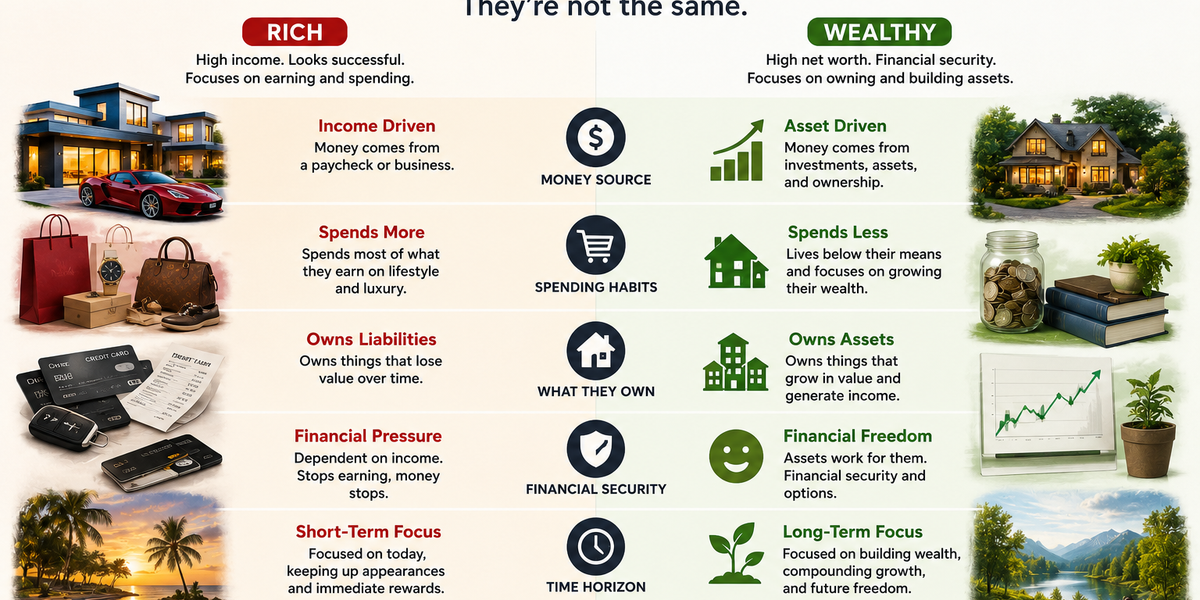
• Rich people often have high incomes, while wealthy people own valuable assets.
• Wealth is typically associated with long-term financial security and freedom.
• A person can appear rich without being wealthy.
• Building wealth usually requires saving, investing, and thinking long term.
What Does It Mean to Be Rich?
When people think of someone who is rich, they often imagine visible signs of financial success.
Luxury cars, expensive homes, designer clothing, exclusive vacations, and high incomes are commonly associated with being rich. In many cases, being rich simply means having a large amount of money coming in.
A doctor, professional athlete, executive, or successful entrepreneur may earn a very high income and therefore be considered rich. However, income alone does not tell the full story.
Someone can earn a substantial amount of money and still spend nearly all of it. High income does not automatically create financial security.
What Does It Mean to Be Wealthy?
Wealth is generally less about how much money you earn and more about what you own.
A wealthy person typically has assets that continue generating value over time. These assets may include investments, businesses, real estate, retirement accounts, or other forms of ownership that contribute to long-term financial stability.
Unlike income, which often depends on continued work, wealth can continue growing even when someone is not actively earning money every day.
This is why wealth is often associated with financial freedom. It provides options, flexibility, and security that go beyond a paycheck.
High Income Doesn’t Always Create Wealth
One of the biggest financial misconceptions is that earning more money automatically leads to wealth.
In reality, many high-income earners struggle financially because their spending rises alongside their earnings. As income increases, so do housing costs, lifestyle expenses, subscriptions, travel budgets, and other forms of consumption.
This pattern, often called lifestyle inflation, can make even a large salary disappear surprisingly quickly.
Without saving, investing, and building assets, a person may appear financially successful while making little progress toward long-term wealth.
Wealth Is Often Invisible
One reason people confuse richness with wealth is that wealth is not always easy to see.
A luxury car is visible. A healthy investment portfolio is not.
An expensive watch attracts attention. Consistent retirement contributions do not.
Many wealthy people choose to live below their means and prioritize financial security over status. As a result, they may not look particularly rich to outsiders despite having substantial assets and strong financial foundations.
Appearances can be misleading when it comes to money.
The Role of Financial Freedom
Perhaps the biggest difference between being rich and being wealthy is freedom.
A rich person may earn a great deal of money but remain dependent on that income to maintain their lifestyle. If the paycheck stops, financial pressure may quickly appear.
A wealthy person, on the other hand, often has assets that provide financial support independently of day-to-day work. This can create greater flexibility in career decisions, lifestyle choices, and future planning.
Wealth is not simply about having money. It’s about having options.
Building Wealth Takes Time
Richness can sometimes happen quickly.
A large salary increase, a successful business launch, a bonus, or a sudden windfall can dramatically increase income in a short period. Wealth, however, is usually built more gradually.
It often requires years of saving, investing, learning, and making disciplined financial decisions. Small actions repeated consistently over time tend to play a larger role than dramatic financial breakthroughs.
This is one reason why patience is such an important ingredient in wealth-building.
Why the Difference Matters
Understanding the distinction between rich and wealthy can help people make better financial decisions.
If the goal is simply to appear successful, spending money may seem like the obvious path. If the goal is long-term financial security and freedom, the focus often shifts toward ownership, investing, and building assets.
Neither income nor lifestyle is inherently bad. The important thing is understanding that wealth is usually created by what you keep and grow, not simply by what you earn and spend.
The habits that create wealth often look very different from the habits that create the appearance of wealth.
Looking Beyond Appearances
In a world where visible possessions often judge financial success, it’s easy to confuse income with wealth.
But the two are not the same. Being rich is often about earning a lot of money. Being wealthy is about building assets, creating financial security, and gaining the freedom that comes from long-term financial stability.
Many people spend years chasing the appearance of success while neglecting the foundations that create lasting wealth. Those who understand the difference are often better positioned to make decisions that support their future rather than simply impress others in the present.
Because in the end, true wealth is not always about what people can see. It’s about the financial strength that remains even when nobody is looking.