How to Write a Resume That Actually Gets Read
A resume is often your first opportunity to make an impression on a potential employer. Before an interview is scheduled, before a hiring manager learns about your personality, and before you have a chance to explain your experience, your resume has to do one important job: convince someone to keep reading.
The challenge is that recruiters and hiring managers often review dozens, sometimes hundreds, of applications for a single position. In many cases, a resume receives only a few seconds of attention before a decision is made about whether to move forward.
This means that a good resume is not simply a list of jobs and qualifications. It’s a document designed to communicate value quickly, clearly, and effectively.
Key Takeaways
• Recruiters often spend only a short amount of time reviewing resumes.
• Clear formatting can be just as important as strong experience.
• Employers care more about results than job duties.
• Tailoring your resume for specific roles can improve your chances.
• Simplicity and clarity often outperform overly creative designs.
Keep It Simple
One of the most common resume mistakes is trying to make the document look overly impressive.
Complicated layouts, excessive colors, unusual fonts, and crowded designs can make important information harder to find. Most hiring managers care far more about your qualifications than your graphic design skills.
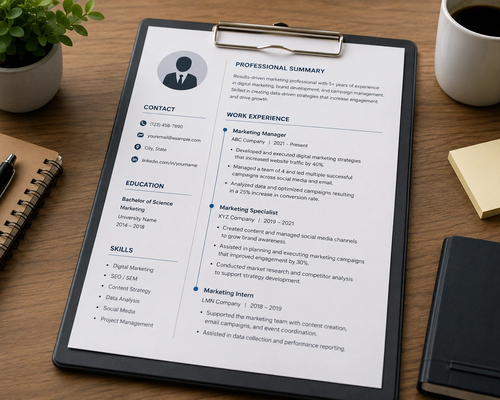
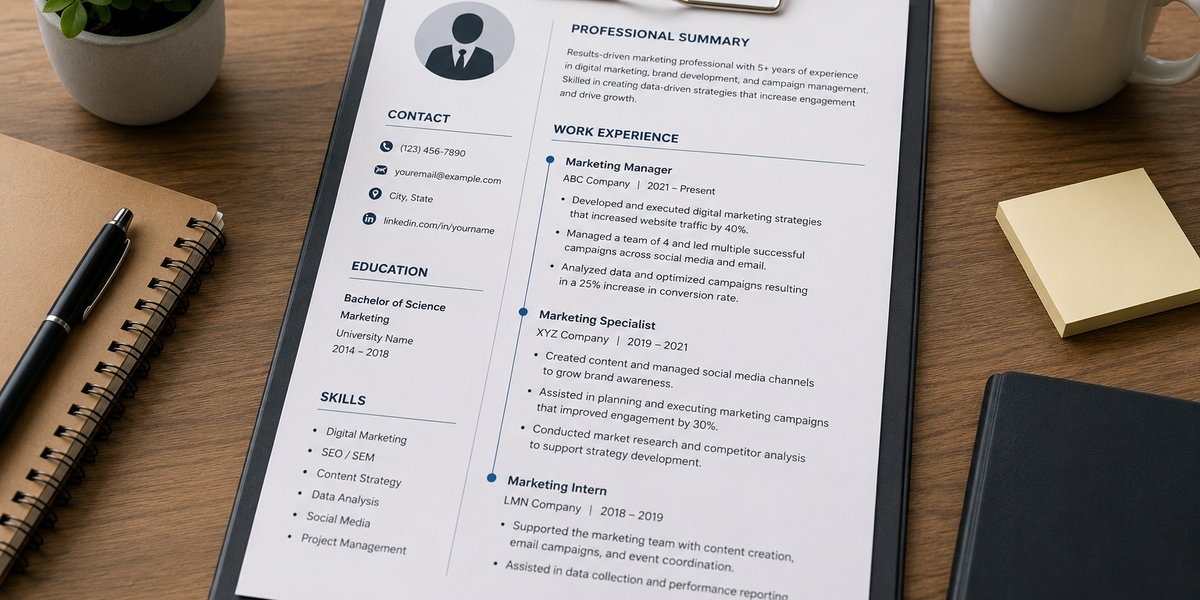
A clean, professional format helps readers quickly identify key information such as work experience, education, and skills.
The easier your resume is to scan, the more likely it is to be read carefully.
Focus on Results, Not Responsibilities
Many resumes simply list job duties.
The problem is that responsibilities alone don’t tell employers what impact you actually made. Hiring managers are often more interested in achievements than tasks.
Instead of stating what your role required, focus on what you accomplished. Highlight improvements you contributed to, projects you completed, goals you achieved, or measurable results you helped create.
Even small accomplishments can demonstrate value when presented clearly.
A resume should show what happened because you were there.
Tailor Your Resume to the Job
A generic resume may be convenient, but it is rarely the most effective approach.
Different employers prioritize different skills, experiences, and qualifications. Taking the time to adjust your resume for a specific role can make a significant difference.
This does not mean rewriting the entire document every time you apply. Often, it simply involves emphasizing the experience and skills that are most relevant to the position.
Employers want to see how your background connects to their needs.
Make the Most Important Information Easy to Find
Recruiters often skim resumes before reading them in detail.
For this reason, key information should be easy to locate. Work experience, relevant achievements, education, and important skills should stand out clearly without forcing readers to search for them.
Long blocks of text can make a resume feel overwhelming and difficult to navigate. Well-organized sections help guide the reader through your experience efficiently.
The goal is to make understanding your qualifications as effortless as possible.
Keep It Relevant
Many people feel tempted to include every job, project, certification, and achievement they’ve ever had.
In reality, more information is not always better. A resume should focus on the experiences most relevant to the position you’re seeking.
Including unrelated details can distract from your strongest qualifications and make the document feel cluttered.
Employers are usually looking for evidence that you can succeed in the role they’re hiring for, not a complete history of everything you’ve ever done.
Don’t Underestimate the Summary Section
A strong professional summary can help establish context quickly.
This section provides a brief overview of who you are, what experience you bring, and the type of value you can offer an employer. It should be concise, specific, and focused on strengths relevant to the role.
Rather than using generic statements, aim to communicate what makes you a strong candidate.
A well-written summary can encourage recruiters to continue reading.
Proofread Carefully
Few things undermine a resume faster than obvious mistakes.
Spelling errors, grammatical issues, inconsistent formatting, and incorrect dates can create the impression of carelessness, even when the candidate is highly qualified.
Before submitting a resume, review it carefully and, if possible, ask someone else to read it as well. Fresh eyes often catch mistakes that the writer misses.
Attention to detail matters, especially when competing against other applicants.
Think Like the Hiring Manager
One of the most effective ways to improve a resume is to view it from the employer’s perspective.
Hiring managers are not simply looking for impressive qualifications. They are looking for evidence that a candidate can solve problems, contribute to the organization, and succeed in the role.
Every section of a resume should help answer one question: why should this person be considered for an interview?
The clearer that answer becomes, the stronger the resume will be.
Opening the Door to Opportunities
A resume does not need to be perfect to be effective. It simply needs to communicate your value clearly and make it easy for employers to understand what you bring to the table.
Strong resumes focus on relevant experience, measurable achievements, and clear presentation. They avoid unnecessary complexity and keep the reader’s attention on what matters most.
While a resume alone cannot guarantee a job offer, it can create opportunities. In many cases, its purpose is not to get you the job. It’s to earn the conversation that comes next.
And sometimes, that conversation can change everything.