
The Real Reason Some People Get Rich and Most Don't
Why do some people build significant wealth while most others never do?
It’s a question that has fascinated economists, entrepreneurs, investors, and everyday people for generations. Some believe the answer is intelligence. Others point to luck, education, family background, or hard work.
The reality is more complicated.
There is no single reason people become wealthy, just as there is no single reason people struggle financially. Wealth is usually the result of multiple factors working together over long periods of time. However, when you look closely at the habits and decisions of many financially successful people, certain patterns begin to emerge.
The biggest difference is often not how much money people earn. It’s what they do with the money, opportunities, and time they have.
Key Takeaways
• Building wealth is usually a long-term process rather than a single event.
• Income matters, but financial habits often matter just as much.
• Wealthy people tend to focus on ownership, investing, and long-term growth.
• Consistency often beats short bursts of effort.
• Most wealth is built gradually rather than quickly.
They Think Beyond the Next Paycheck
Many people spend their financial lives focused on the short term.
Bills need to be paid, expenses need to be covered, and immediate needs naturally demand attention. While this is understandable, wealth often begins to grow when people start thinking beyond the next week, month, or year.
Financially successful people tend to make decisions with the future in mind. They are often willing to delay immediate rewards in exchange for larger benefits later.
This long-term perspective influences everything from spending habits to career choices and investment decisions.
They Prioritize Ownership
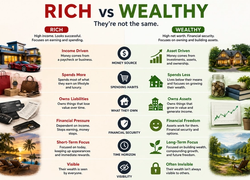
One of the biggest differences between wealthy individuals and everyone else is the focus on ownership.
Most people earn money primarily by exchanging time for income. Wealthy people often spend years acquiring assets that can generate income or increase in value independently of their daily effort.
These assets may include businesses, investments, real estate, intellectual property, or other forms of ownership.
The goal is not simply to earn money but to own things that can continue producing value over time.
They Understand the Power of Compounding
Wealth rarely appears overnight.
Instead, it often grows through small actions repeated consistently over long periods. Saving, investing, learning new skills, and making smart financial decisions may not produce dramatic results immediately, but their effects can accumulate significantly over time.
This is one reason why patience is such a powerful financial advantage.
Many people underestimate what can be accomplished over decades because they focus too heavily on what can be achieved in a few months.
They Live Below Their Means
Contrary to popular stereotypes, many wealthy people do not spend every dollar they earn.
In fact, one of the most common wealth-building habits is maintaining a gap between income and spending. This gap creates the ability to save, invest, and take advantage of future opportunities.
Many people assume wealth comes from earning more. Often, it comes from consistently spending less than you earn and putting the difference to work.
Income creates opportunity, but financial discipline often determines whether wealth actually grows.
They Invest in Skills
One of the highest-return investments is often personal development.
Skills that increase a person’s ability to solve problems, communicate effectively, lead others, negotiate, or create value can significantly improve earning potential over time.
Many financially successful individuals spend years investing in education, training, and continuous learning. They understand that increasing their value often increases their opportunities.
Knowledge alone does not create wealth, but valuable skills can open doors that might otherwise remain closed.
They Accept Calculated Risks
Wealth creation often involves risk, but not necessarily reckless risk.
Starting a business, investing money, changing careers, or pursuing new opportunities can all involve uncertainty. Many successful people become comfortable making informed decisions despite the possibility of failure.
The key difference is that they typically take calculated risks rather than impulsive ones. They gather information, evaluate potential outcomes, and make decisions based on probabilities rather than emotions.
Avoiding every risk can sometimes be just as limiting as taking too many.
They Stay Consistent
One of the least glamorous truths about wealth is that it is often built through consistency.
Many people search for shortcuts, quick wins, or secret strategies. In reality, wealth creation frequently involves years of disciplined saving, investing, learning, and decision-making.
The habits themselves may not seem extraordinary. What makes them powerful is their repetition over time.
Consistency often matters more than intensity.
Luck Matters, But It’s Not the Whole Story
Any honest discussion about wealth should acknowledge the role of luck.
Family background, timing, economic conditions, health, geography, and unexpected opportunities can all influence financial outcomes. Some people begin life with significant advantages, while others face challenges that make wealth-building more difficult.
At the same time, luck alone rarely explains long-term financial success. Habits, decisions, and behavior still play a major role in determining what people do with the opportunities available to them.
Recognizing the role of both effort and circumstance provides a more realistic understanding of wealth.
Building Wealth Is Often Boring
One of the biggest misconceptions about becoming rich is that it requires extraordinary brilliance, perfect timing, or dramatic breakthroughs.
While those things can help, wealth is often built through surprisingly ordinary actions repeated consistently over many years. Living below your means, investing regularly, developing valuable skills, thinking long term, and owning assets may not sound exciting, but these habits have helped create wealth for countless people.
The difference between those who build wealth and those who don’t is rarely a single decision. It’s usually the result of thousands of small decisions made over time.
In the end, getting rich is often less about finding a secret and more about doing the fundamentals well for longer than most people are willing to.