How to Protect Your Personal Data Online
Every time you browse a website, create an account, make an online purchase, or use a mobile app, you leave behind pieces of personal information. In today’s digital world, data has become one of the most valuable assets, not only for businesses but also for cybercriminals looking to exploit it.
While the internet offers incredible convenience, it also comes with risks. Identity theft, phishing scams, account takeovers, and data breaches have become increasingly common, affecting millions of people every year.
The good news is that protecting your personal information does not require advanced technical knowledge. A few simple habits can significantly reduce your risk and help keep your data secure.
Key Takeaways
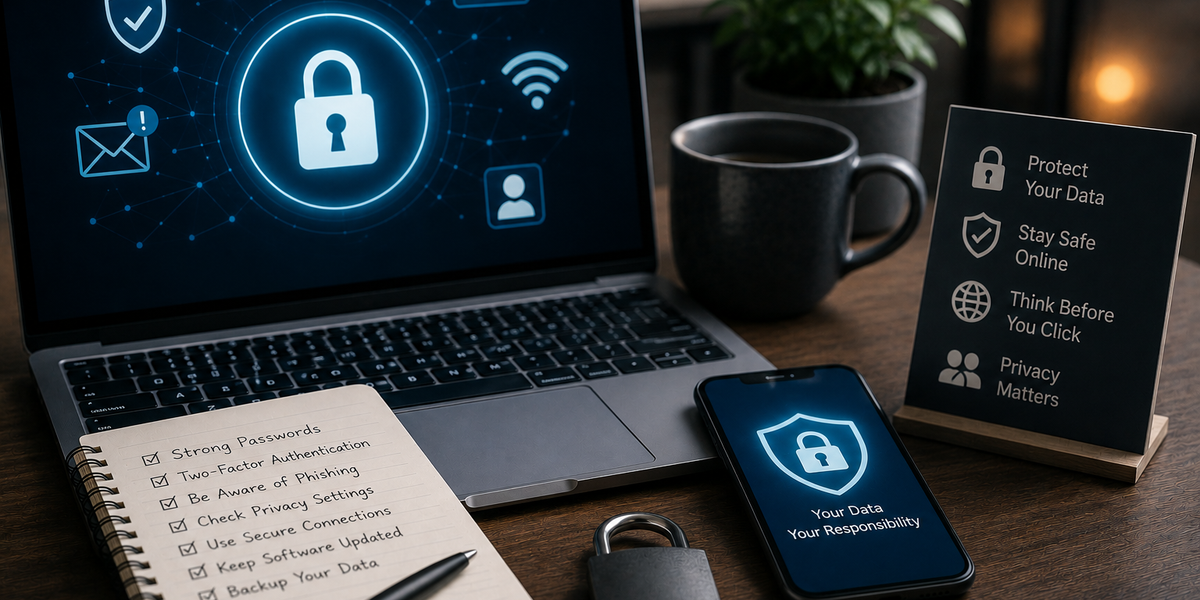
• Strong passwords are one of the most important online security tools.
• Two-factor authentication adds an extra layer of protection to your accounts.
• Phishing scams often rely on tricking people rather than hacking technology.
• Public Wi-Fi networks can expose personal information if used carelessly.
• Regularly reviewing privacy settings can improve your online security.
Use Strong and Unique Passwords
Passwords remain the first line of defense for most online accounts.
One of the biggest mistakes people make is reusing the same password across multiple websites. If one account becomes compromised, attackers may attempt to use those same credentials elsewhere.
Creating unique passwords for different accounts helps limit the damage if a breach occurs. Strong passwords are typically longer, less predictable, and difficult for others to guess.
While remembering dozens of passwords may seem impossible, password managers can help generate and store them securely.
Enable Two-Factor Authentication
Even strong passwords are not always enough.
Two-factor authentication adds a second verification step when signing into an account. In addition to entering a password, users may need to provide a code sent to their phone, generated by an authentication app, or confirmed through another device.
This extra layer of security makes it significantly harder for unauthorized users to gain access, even if they somehow obtain your password.
Many major online services now offer two-factor authentication, and enabling it is one of the simplest ways to improve account security.
Be Careful With Suspicious Messages
Many cyberattacks do not begin with sophisticated technology. They begin with deception.
Phishing scams often appear as emails, text messages, or social media messages that look legitimate. They may claim there is a problem with an account, an urgent payment issue, or an important document requiring immediate attention.
The goal is usually to convince people to click malicious links or reveal sensitive information.
Before responding to unexpected messages, it is worth taking a moment to verify the sender and consider whether the request seems reasonable. A little caution can prevent a major security problem.
Think Before Sharing Personal Information
Not every website, app, or online form needs access to your personal details.
Many services request information that may not be essential for their functionality. Before providing phone numbers, addresses, birth dates, or other personal details, it is worth considering whether the information is truly necessary.
The less information available online, the less information can potentially be exposed during a data breach.
Being selective about what you share is a simple but effective security practice.
Use Public Wi-Fi Carefully
Public Wi-Fi networks can be convenient, but they are not always secure.
Airports, hotels, cafés, and shopping centers often provide free internet access, yet these networks may expose users to additional risks if proper precautions are not taken.
When using public Wi-Fi, it is generally wise to avoid accessing sensitive accounts, making financial transactions, or sharing confidential information unless the connection is properly secured.
A trusted mobile data connection may sometimes be the safer option.
Keep Devices and Apps Updated
Software updates are not just about new features.
Many updates include security patches designed to fix vulnerabilities that attackers may exploit. Delaying updates can leave devices exposed to risks that have already been addressed by developers.
Keeping operating systems, apps, browsers, and security software up to date is one of the easiest ways to strengthen digital security.
Regular updates help ensure that known weaknesses are fixed before they can be abused.
Review Privacy Settings
Many online services collect more information than users realize.
Social media platforms, mobile apps, and websites often include privacy settings that allow users to control what information is shared and who can access it.
Taking time to review these settings can limit unnecessary data collection and provide greater control over personal information.
Privacy settings are often overlooked, but they can play an important role in protecting online identities.
No Security Measure Is Perfect
One common misconception is that a single tool or security product can eliminate all online risks.
In reality, cybersecurity is usually about reducing risk rather than achieving complete protection. Even highly secure systems can become vulnerable if users are careless with passwords, links, or personal information.
The most effective approach combines multiple habits, including strong passwords, authentication measures, cautious online behavior, and regular software updates.
Security works best when it becomes part of everyday routine.
Staying Safe in a Connected World
Protecting personal data online has never been more important. As more aspects of daily life move into digital spaces, the amount of information stored online continues to grow.
Fortunately, improving online security does not require becoming a technology expert. Small actions taken consistently can make a significant difference. Strong passwords, careful browsing habits, secure accounts, and thoughtful sharing decisions all contribute to a safer online experience.
The internet offers incredible opportunities, but it also requires awareness and responsibility. By taking a proactive approach to protecting your data, you can enjoy the benefits of being connected while reducing the risks that come with it.