How to Build an Emergency Fund (Step by Step)
Unexpected expenses are a normal part of life. A car repair, medical bill, job loss, home repair, or sudden family emergency can appear at any time, often when people are least prepared for it.
This is why an emergency fund is one of the most important parts of personal finance. It gives you a financial cushion when life becomes unpredictable and helps prevent one unexpected expense from turning into long-term debt.
Building an emergency fund may seem difficult at first, especially when money already feels tight. But it does not have to happen all at once. The key is to start small, stay consistent, and build the habit over time.
Key Takeaways
• An emergency fund helps protect you from unexpected expenses.
• Even a small amount of savings can reduce financial stress.
• The best emergency fund goal depends on your income, expenses, and lifestyle.
• Consistent saving matters more than saving large amounts at once.
• Emergency savings should be easy to access but separate from everyday spending.
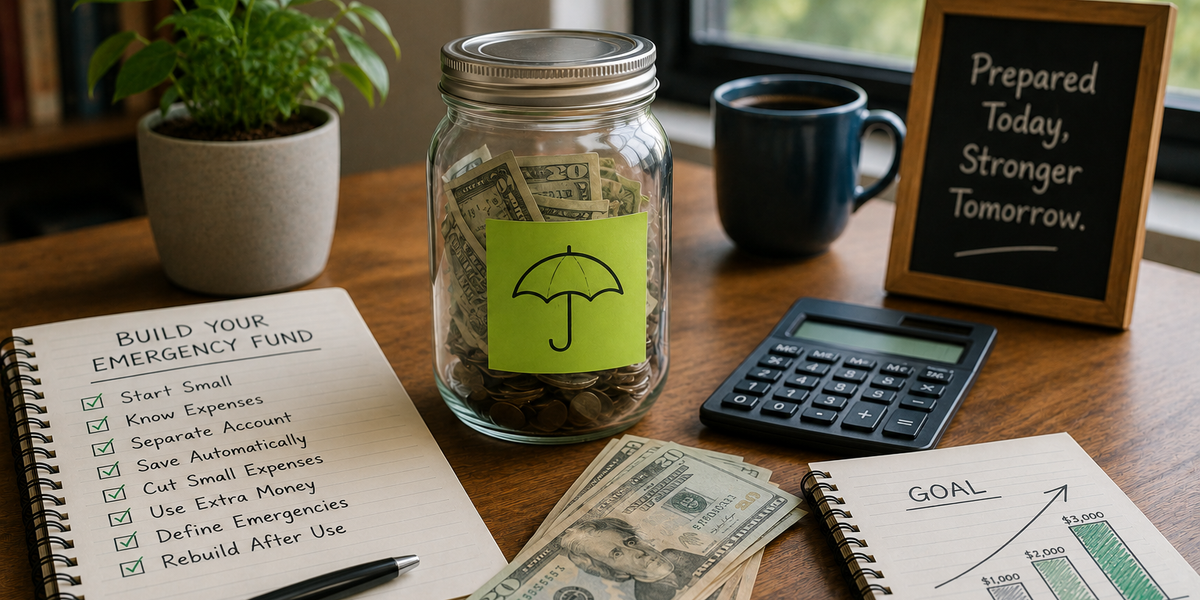
Start With a Small Goal
Many people hear that they should save three to six months of expenses and immediately feel overwhelmed. While that is a helpful long-term goal, it does not need to be the first step.
A better starting point is a smaller, more realistic target. Saving even a few hundred dollars can make a meaningful difference when an unexpected expense appears.
The first goal is not to build the perfect emergency fund overnight. It is to create a financial buffer that gives you breathing room and confidence.
Know Your Monthly Expenses
Before deciding how much to save, it helps to understand your basic monthly expenses.
These usually include rent or mortgage payments, utilities, groceries, transportation, insurance, debt payments, and other essential costs. Knowing this number helps you understand what it would take to cover your life for one month, three months, or longer.
An emergency fund should be based on real needs, not a random number. The clearer you are about your expenses, the easier it becomes to set a practical savings goal.
Open a Separate Savings Account
Keeping emergency money in the same account as everyday spending can make it too easy to use it for non-emergencies.
A separate savings account creates distance between your regular money and your emergency fund. The money should still be easy to access when truly needed, but not so easy that you spend it without thinking.
This separation helps protect your savings and makes your progress easier to track.
Save Automatically
One of the simplest ways to build an emergency fund is to automate the process.
Instead of waiting to see how much money is left at the end of the month, set aside a fixed amount as soon as you get paid. Even a small automatic transfer can build momentum over time.
Saving becomes much easier when it does not depend on motivation or memory. The habit works quietly in the background while your fund grows little by little.
Cut Small Expenses Temporarily
Building an emergency fund does not always require dramatic lifestyle changes. Sometimes small adjustments are enough to create extra room in the budget.
Reducing takeout meals, unused subscriptions, impulse purchases, or unnecessary shopping for a short period can free up money that can be redirected into savings.
The goal is not to eliminate every enjoyable expense forever. It is to prioritize financial security until your emergency fund reaches a more comfortable level.
Use Extra Money Wisely
Bonuses, tax refunds, gifts, freelance income, or unexpected payments can help grow an emergency fund faster.
Instead of spending all extra money immediately, putting a portion into savings can create major progress without changing your regular budget too much.
These occasional boosts can help you reach your emergency fund goal sooner and make the process feel less slow.
Define What Counts as an Emergency
One of the most important parts of maintaining an emergency fund is knowing when to use it.
Emergency savings should be reserved for real financial surprises, such as urgent repairs, medical needs, loss of income, or essential expenses that cannot wait.
It should not be used for vacations, sales, regular bills you forgot about, or everyday overspending.
Clear rules help protect the fund and make it more likely that the money will be there when you truly need it.
Rebuild After You Use It
Using your emergency fund is not a failure. It is exactly what the fund is for.
If an emergency happens and you need to spend part of the money, the next step is simply to rebuild it. Return to your savings plan and start adding money again until the fund is restored.
The purpose of an emergency fund is not to remain untouched forever. Its purpose is to protect you when life becomes expensive unexpectedly.
Building Financial Peace of Mind
An emergency fund is not just about money. It is about stability, confidence, and peace of mind.
Knowing that you have savings set aside can reduce stress and make it easier to handle difficult situations without relying on credit cards, loans, or panic decisions.
Building the fund step by step may take time, but every contribution brings you closer to greater financial security. Even small progress matters.
The best time to start is not when you have extra money. It is when you decide that your future self deserves protection.